Showing posts with label Revolution. Show all posts

Saturday, November 1, 2025

Radio Waves of Justice


How a 1946 Radio Show Took on White Supremacy

In the summer of 1946, Superman didn’t just leap tall buildings—he leapt into one of the most courageous battles in pop culture history. In a 16-part arc of The Adventures of Superman radio show, the Man of Steel took on a fictional hate group called the Clan of the Fiery Cross. Modeled after the Ku Klux Klan, this storyline wasn’t just entertainment—it was a strategic strike against real-world racism.

The Storyline: Courage in the Airwaves

The arc begins when a Chinese-American boy named Tommy Lee joins a youth baseball team. His inclusion sparks outrage from a local hate group, the Clan of the Fiery Cross, who begin threatening his family. Superman steps in—not just to protect Tommy, but to expose and dismantle the clan’s ideology and tactics.

The show aired in June and July of 1946, just as America was grappling with postwar racial tensions and the resurgence of white supremacist groups. The writers didn’t hold back: the clan was portrayed as cowardly, ignorant, and dangerous. Superman’s intervention was both physical and moral—he used his strength and his voice to challenge hate.

The Real-Life Spy Behind the Scenes

Civil rights activist and journalist Stetson Kennedy played a pivotal role in the arc’s creation. Kennedy infiltrated the real Ku Klux Klan and passed their secret codes, rituals, and language to the show’s producers. These details were woven into the broadcast, effectively mocking and demystifying the Klan’s aura of power.

Kennedy’s goal was clear: use Superman’s popularity to undermine the Klan’s recruitment and public image. And it worked.

Public Reception: A Cultural Body Blow

The response was swift and powerful. Listeners—especially children—were captivated by Superman’s stand against racism. The Klan, on the other hand, was humiliated. Their secret rituals were now public knowledge, and their image as a fearsome underground force was shattered.

While exact ratings data from the time is scarce, anecdotal evidence and later interviews suggest the arc had a chilling effect on Klan recruitment. Kennedy himself claimed the show did more to damage the Klan than many political efforts.

Listen to the radio show here.


Legacy and Revival

The story’s impact didn’t fade. In 2019, DC Comics released Superman Smashes the Klan, a three-part graphic novel by Gene Luen Yang and Gurihiru. It reimagines the 1946 arc for modern audiences, emphasizing themes of identity, courage, and community solidarity.

Why It Still Matters

“Clan of the Fiery Cross” wasn’t just a radio drama—it was a cultural intervention. It showed that superheroes could do more than fight aliens and mad scientists. They could fight hate. They could stand for justice in the real world.

In an era where media is often criticized for avoiding controversy, this 1946 broadcast reminds us that storytelling can be a weapon against injustice. Superman didn’t just wear a cape—he wore conviction.

About the Author

Daryl Horton is a technical and creative writer who lives at the intersection of structured systems and imaginative storytelling. With an extensive background in business information management and information systems, he has spent years helping organizations untangle complex processes and work smarter. After reaching the dissertation phase of a Knowledge Management PhD program at Walden University, Daryl made the deliberate leap to step away from academia and dedicate himself to creative writing and publishing through Abolitic. Today, he blends analytical rigor with artistic craft—bringing clarity to technical projects and structure to creative worlds.

You can find more information about Daryl Horton on his LinkedIn page at https://www.linkedin.com/in/darylhorton/.

Generated by Microsoft Copilot. Reviewed and edited by a human author.

Available at Amazon


Illustrating Resistance


How Superhero Comics Have Battled White Supremacy

From their earliest days, comic books have been more than escapist entertainment—they’ve been battlegrounds for justice. While superheroes often punch out bank robbers and alien invaders, some of their most powerful stories involve confronting real-world hate, especially white supremacy. This blog explores how comics have historically tackled racism head-on, and why these stories matter now more than ever.

A Legacy of Resistance

1940s: Punching Nazis in the Face

The fight began with Captain America’s iconic debut in Captain America Comics #1 (1941), where he’s shown socking Adolf Hitler. This wasn’t just propaganda—it was a bold statement from Jewish creators Joe Simon and Jack Kirby during a time when America hadn’t yet entered WWII.

1960s–1980s: Allegory and Activism

As civil rights movements gained momentum, comics evolved. The X-Men, created in 1963, became allegories for marginalized groups. In X-Men: God Loves, Man Kills (1982), the team faces off against a religious zealot who preaches mutant genocide—mirroring real-world hate speech.

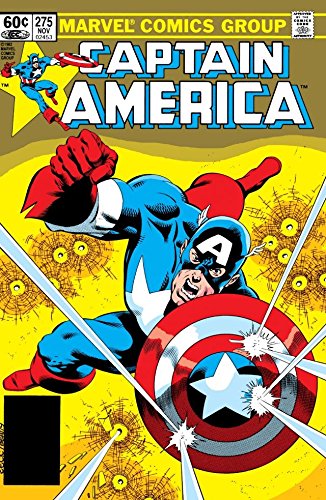
Captain America’s 1980s run also took a darker turn. In Captain America #275–278, Steve Rogers battles the National Force, a neo-Nazi group using mind control and racial violence to spread terror.


Black Heroes, Real Struggles

·        Steel (1994): John Henry Irons, a Black engineer turned superhero, fights gang violence and systemic racism in Metropolis.

·        Icon (Milestone Comics, 1993): A conservative Black alien superhero grapples with race, class, and justice in urban America.

·        Truth: Red, White & Black (2003): This Marvel miniseries reveals the U.S. government’s unethical testing of the Super-Soldier Serum on Black soldiers, inspired by the real-life Tuskegee experiments.

Modern Reckonings

·        Absolute Batman 2025 Annual #1 (2025)
Batman confronts white supremacists in Slaughter Swamp, including Neo-Nazis and KKK members. The story is raw, stylized, and unapologetically political, echoing the urgency of our times.

·        The American Way (2006)
Set in the 1960s, this WildStorm/DC series critiques government manipulation and racial unrest, introducing a Black superhero to a white team to pacify civil rights protests.

·        Black Panther (Ta-Nehisi Coates run, 2016–2021)
While not always direct, Coates’ run explores colonialism, racial supremacy, and resistance through Wakanda’s global interactions.

Why These Stories Matter

Comics are cultural mirrors. When superheroes confront white supremacy, they challenge readers to do the same. These stories don’t just entertain—they educate, provoke, and inspire. They remind us that the fight against hate isn’t just in the streets—it’s in our stories, our symbols, and our imaginations.

Recommended Reading List


About the Author

Daryl Horton is a technical and creative writer who lives at the intersection of structured systems and imaginative storytelling. With an extensive background in business information management and information systems, he has spent years helping organizations untangle complex processes and work smarter. After reaching the dissertation phase of a Knowledge Management PhD program at Walden University, Daryl made the deliberate leap to step away from academia and dedicate himself to creative writing and publishing through Abolitic. Today, he blends analytical rigor with artistic craft—bringing clarity to technical projects and structure to creative worlds.

You can find more information about Daryl Horton on his LinkedIn page at https://www.linkedin.com/in/darylhorton/.

Generated by Microsoft Copilot. Reviewed and edited by a human author.

Available at Amazon


Monday, September 22, 2025

Writing as the Heartbeat of Revolution


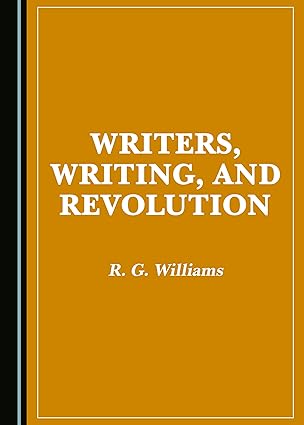
A Call to Arms in Ink: A Review of “Writers, Writing, and Revolution” by R.G. Williams

R.G. Williams’ Writers, Writing, and Revolution isn't a historical novel; it’s a rigorously argued and profoundly important study – a sustained intervention into the critical relationship between literature, political action, and social transformation. This book isn’t designed for casual consumption; it’s a dense, intellectually demanding work aimed squarely at writers and activists seeking to understand how words can truly change the world. 

Analysis

Williams eschews traditional narrative structures in favor of a meticulously researched and powerfully argued framework. The book operates less as a chronological recounting of revolutionary movements and more as a sustained theoretical exploration – dissecting how writers have consistently been both catalysts and casualties within those upheavals. He doesn’t build characters; he builds arguments, drawing on a vast archive of historical texts – manifestos, pamphlets, letters – to demonstrate the enduring power of the written word to mobilize, inspire, and ultimately, shape revolutions. 

The core strength of Writers, Writing, and Revolution lies in its synthesis of literary theory and political action. Williams expertly traces connections between writers like Marx, Lenin, and Zola with radical movements across time periods, demonstrating a consistent pattern: the strategic deployment of rhetoric to challenge existing power structures. He’s less interested in recreating historical events than in analyzing why certain texts proved so effective – examining the use of symbolism, the construction of narratives, and the cultivation of collective identity. 

Crucially, Williams doesn't simply analyze past examples; he issues a direct call for contemporary writers to embrace this role. The book’s central argument – that writers have a moral obligation to engage with social justice struggles – is presented with unwavering conviction. This isn’t a detached academic exercise; it’s a passionate plea for writers to become active agents in the fight for Socialism, utilizing their craft as a tool for radical change. 

Contextual Insight

Williams' expertise shines through his ability to contextualize this argument within broader intellectual traditions – from Romanticism’s emphasis on individual expression to Marxist critiques of bourgeois culture. He positions himself firmly within a lineage of politically engaged writers, acknowledging the risks and sacrifices inherent in such endeavors while simultaneously celebrating their transformative potential. The book arrives at a time when many feel disillusioned with traditional political institutions, offering a compelling argument for the continued relevance – and power – of artistic resistance.

Reader Experience

Surprisingly, Writers, Writing, and Revolution is an exceptionally comfortable read. It doesn’t demand intellectual rigor; the concepts presented are remarkably accessible. Williams avoids dense theoretical jargon, instead framing his arguments in a way that feels almost conversational, as if he's simply recounting a series of fascinating stories. The book essentially depicts revolution not as a grim struggle for power, but as a vibrant, creative process – writing poems and stories, creating art, all fueled by the desire to reshape their world. It’s an optimistic portrayal, focusing on the inherent human impulse towards innovation and expression within revolutionary movements. There aren't “standout moments” in the traditional sense; rather, the entire work unfolds with a gentle momentum, offering a surprisingly engaging and almost celebratory vision of radical change. 

Verdict

Writers, Writing, and Revolution is undeniably a valuable contribution to the discourse on literature and political action. However, it's crucial to acknowledge a significant limitation: its predominantly Eurocentric focus. Despite this omission, the book’s accessibility makes it an inviting entry point for anyone interested in exploring the complex relationship between art and revolution. 

Recommendation: This book is recommended for readers seeking a relatively straightforward introduction to the topic of politically engaged writing – particularly those new to Marxist theory or historical analysis. It's a rewarding read that offers a surprisingly optimistic perspective on revolutionary action, but it should be approached with awareness of its limited scope.

About the Author

Daryl Horton is a technical and creative writer who lives at the intersection of structured systems and imaginative storytelling. With an extensive background in business information management and information systems, he has spent years helping organizations untangle complex processes and work smarter. After reaching the dissertation phase of a Knowledge Management PhD program at Walden University, Daryl made the deliberate leap to step away from academia and dedicate himself to creative writing and publishing through Abolitic. Today, he blends analytical rigor with artistic craft—bringing clarity to technical projects and structure to creative worlds.

You can find more information about Daryl Horton on his LinkedIn page at https://www.linkedin.com/in/darylhorton/.

Generated by the Gemma 3 4b AI model. Reviewed and edited by a human author.