Showing posts with label Art. Show all posts

Saturday, November 1, 2025

Radio Waves of Justice


How a 1946 Radio Show Took on White Supremacy

In the summer of 1946, Superman didn’t just leap tall buildings—he leapt into one of the most courageous battles in pop culture history. In a 16-part arc of The Adventures of Superman radio show, the Man of Steel took on a fictional hate group called the Clan of the Fiery Cross. Modeled after the Ku Klux Klan, this storyline wasn’t just entertainment—it was a strategic strike against real-world racism.

The Storyline: Courage in the Airwaves

The arc begins when a Chinese-American boy named Tommy Lee joins a youth baseball team. His inclusion sparks outrage from a local hate group, the Clan of the Fiery Cross, who begin threatening his family. Superman steps in—not just to protect Tommy, but to expose and dismantle the clan’s ideology and tactics.

The show aired in June and July of 1946, just as America was grappling with postwar racial tensions and the resurgence of white supremacist groups. The writers didn’t hold back: the clan was portrayed as cowardly, ignorant, and dangerous. Superman’s intervention was both physical and moral—he used his strength and his voice to challenge hate.

The Real-Life Spy Behind the Scenes

Civil rights activist and journalist Stetson Kennedy played a pivotal role in the arc’s creation. Kennedy infiltrated the real Ku Klux Klan and passed their secret codes, rituals, and language to the show’s producers. These details were woven into the broadcast, effectively mocking and demystifying the Klan’s aura of power.

Kennedy’s goal was clear: use Superman’s popularity to undermine the Klan’s recruitment and public image. And it worked.

Public Reception: A Cultural Body Blow

The response was swift and powerful. Listeners—especially children—were captivated by Superman’s stand against racism. The Klan, on the other hand, was humiliated. Their secret rituals were now public knowledge, and their image as a fearsome underground force was shattered.

While exact ratings data from the time is scarce, anecdotal evidence and later interviews suggest the arc had a chilling effect on Klan recruitment. Kennedy himself claimed the show did more to damage the Klan than many political efforts.

Listen to the radio show here.


Legacy and Revival

The story’s impact didn’t fade. In 2019, DC Comics released Superman Smashes the Klan, a three-part graphic novel by Gene Luen Yang and Gurihiru. It reimagines the 1946 arc for modern audiences, emphasizing themes of identity, courage, and community solidarity.

Why It Still Matters

“Clan of the Fiery Cross” wasn’t just a radio drama—it was a cultural intervention. It showed that superheroes could do more than fight aliens and mad scientists. They could fight hate. They could stand for justice in the real world.

In an era where media is often criticized for avoiding controversy, this 1946 broadcast reminds us that storytelling can be a weapon against injustice. Superman didn’t just wear a cape—he wore conviction.

About the Author

Daryl Horton is a technical and creative writer who lives at the intersection of structured systems and imaginative storytelling. With an extensive background in business information management and information systems, he has spent years helping organizations untangle complex processes and work smarter. After reaching the dissertation phase of a Knowledge Management PhD program at Walden University, Daryl made the deliberate leap to step away from academia and dedicate himself to creative writing and publishing through Abolitic. Today, he blends analytical rigor with artistic craft—bringing clarity to technical projects and structure to creative worlds.

You can find more information about Daryl Horton on his LinkedIn page at https://www.linkedin.com/in/darylhorton/.

Generated by Microsoft Copilot. Reviewed and edited by a human author.

Available at Amazon


Illustrating Resistance


How Superhero Comics Have Battled White Supremacy

From their earliest days, comic books have been more than escapist entertainment—they’ve been battlegrounds for justice. While superheroes often punch out bank robbers and alien invaders, some of their most powerful stories involve confronting real-world hate, especially white supremacy. This blog explores how comics have historically tackled racism head-on, and why these stories matter now more than ever.

A Legacy of Resistance

1940s: Punching Nazis in the Face

The fight began with Captain America’s iconic debut in Captain America Comics #1 (1941), where he’s shown socking Adolf Hitler. This wasn’t just propaganda—it was a bold statement from Jewish creators Joe Simon and Jack Kirby during a time when America hadn’t yet entered WWII.

1960s–1980s: Allegory and Activism

As civil rights movements gained momentum, comics evolved. The X-Men, created in 1963, became allegories for marginalized groups. In X-Men: God Loves, Man Kills (1982), the team faces off against a religious zealot who preaches mutant genocide—mirroring real-world hate speech.

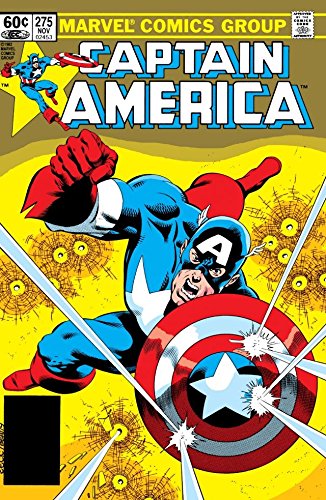
Captain America’s 1980s run also took a darker turn. In Captain America #275–278, Steve Rogers battles the National Force, a neo-Nazi group using mind control and racial violence to spread terror.


Black Heroes, Real Struggles

·        Steel (1994): John Henry Irons, a Black engineer turned superhero, fights gang violence and systemic racism in Metropolis.

·        Icon (Milestone Comics, 1993): A conservative Black alien superhero grapples with race, class, and justice in urban America.

·        Truth: Red, White & Black (2003): This Marvel miniseries reveals the U.S. government’s unethical testing of the Super-Soldier Serum on Black soldiers, inspired by the real-life Tuskegee experiments.

Modern Reckonings

·        Absolute Batman 2025 Annual #1 (2025)
Batman confronts white supremacists in Slaughter Swamp, including Neo-Nazis and KKK members. The story is raw, stylized, and unapologetically political, echoing the urgency of our times.

·        The American Way (2006)
Set in the 1960s, this WildStorm/DC series critiques government manipulation and racial unrest, introducing a Black superhero to a white team to pacify civil rights protests.

·        Black Panther (Ta-Nehisi Coates run, 2016–2021)
While not always direct, Coates’ run explores colonialism, racial supremacy, and resistance through Wakanda’s global interactions.

Why These Stories Matter

Comics are cultural mirrors. When superheroes confront white supremacy, they challenge readers to do the same. These stories don’t just entertain—they educate, provoke, and inspire. They remind us that the fight against hate isn’t just in the streets—it’s in our stories, our symbols, and our imaginations.

Recommended Reading List


About the Author

Daryl Horton is a technical and creative writer who lives at the intersection of structured systems and imaginative storytelling. With an extensive background in business information management and information systems, he has spent years helping organizations untangle complex processes and work smarter. After reaching the dissertation phase of a Knowledge Management PhD program at Walden University, Daryl made the deliberate leap to step away from academia and dedicate himself to creative writing and publishing through Abolitic. Today, he blends analytical rigor with artistic craft—bringing clarity to technical projects and structure to creative worlds.

You can find more information about Daryl Horton on his LinkedIn page at https://www.linkedin.com/in/darylhorton/.

Generated by Microsoft Copilot. Reviewed and edited by a human author.

Available at Amazon


Sunday, July 27, 2025

When Unity is a Threat


Art of Division

In a time when public trust is eroding and unpopular decisions mount, the preservation of power increasingly relies on division rather than unity. By selectively awarding lucrative contracts to favored groups—often funded by gutting federal programs or displacing others—leadership manufactures economic loyalty while deepening resentment. Aligning with influencers ensures that curated narratives drown out dissent, turning public discourse into a performance of consent. And by appeasing one marginalized group through the targeting or deportation of another, the administration exploits fear and prejudice to fracture potential coalitions. These tactics, though cloaked in modern language, echo centuries-old strategies designed to keep the majority fragmented, distracted, and disempowered—ensuring that the true source of their hardship remains obscured.

The Art of Division 

In halls of power, where silence buys time,
A whisper becomes policy, cloaked in design.
They carve the nation not by need, but by scheme,
Feeding one hand while the other bleeds unseen.

Contracts fall like rain on the chosen few,
Funded by the jobs of those they undo.
Programs gutted, safety nets torn,
While the hungry are told to weather the storm.

Voices once loud now echo through screens,
Influencers crowned as the new kings and queens.
Truth is a script, rehearsed and refined,
While dissent is drowned in a well-curated mind.

And when unrest stirs in the belly of the land,
They point to the stranger with a trembling hand.
Deport the dreamer, cage the plea,
To calm the fears of the angry and free.

But this is no new play, no novel deceit—
It’s the same old mask with a modern beat.
Divide the poor, distract the wise,
So no one sees where the true power lies.

About the Author

Daryl Horton is a technical and creative writer who lives at the intersection of structured systems and imaginative storytelling. With an extensive background in business information management and information systems, he has spent years helping organizations untangle complex processes and work smarter. After reaching the dissertation phase of a Knowledge Management PhD program at Walden University, Daryl made the deliberate leap to step away from academia and dedicate himself to creative writing and publishing through Abolitic. Today, he blends analytical rigor with artistic craft—bringing clarity to technical projects and structure to creative worlds.

You can find more information about Daryl Horton on his LinkedIn page at https://www.linkedin.com/in/darylhorton/.

Co-written with Microsoft Copilot

Friday, January 10, 2025

Broken


Description

My version of a Triptych. A Triptych in poetry is the artful composition of a poem in three distinct yet interconnected sections, each telling a part of a larger story or theme. In my version, the first poem is on the left, the second poem is on the right, and the two poems read together, ignoring the division between the two poems, represents the third poem.

About the Author

Daryl Horton is a technical and creative writer who lives at the intersection of structured systems and imaginative storytelling. With an extensive background in business information management and information systems, he has spent years helping organizations untangle complex processes and work smarter. After reaching the dissertation phase of a Knowledge Management PhD program at Walden University, Daryl made the deliberate leap to step away from academia and dedicate himself to creative writing and publishing through Abolitic. Today, he blends analytical rigor with artistic craft—bringing clarity to technical projects and structure to creative worlds.

You can find more information about Daryl Horton on his LinkedIn page at https://www.linkedin.com/in/darylhorton/.

Sunday, September 15, 2024

Strategic Couples

Through strategic planning, 

love becomes our quest,

For loving couples 

engaging life's many tests.

Friday, December 2, 2022

This is America


This is America,

Home of mass hysteria,

Where life is inferior,

And guns, we got plethora.


This is soil,

Where blood boils,

Water, thicker than oil,

Psychologically wound like coils.


This is the place,

Where you get erased,

Virological debates,

And politically defaced.


I'm so cool like whoa

FDA all in your bowl,

Control your menstrual flow

So new birthrates be real slow.


This is America.


About the Author

Daryl Horton is a technical and creative writer who lives at the intersection of structured systems and imaginative storytelling. With an extensive background in business information management and information systems, he has spent years helping organizations untangle complex processes and work smarter. After reaching the dissertation phase of a Knowledge Management PhD program at Walden University, Daryl made the deliberate leap to step away from academia and dedicate himself to creative writing and publishing through Abolitic. Today, he blends analytical rigor with artistic craft—bringing clarity to technical projects and structure to creative worlds.

You can find more information about Daryl Horton on his LinkedIn page at https://www.linkedin.com/in/darylhorton/.

Tuesday, September 8, 2020

The Voice of Division


It was a black hole.

A nasty, filthy, dirty emptiness.

It was dark and damp and

creatures lived there.

You couldn't see them,

but you could hear their voices;

their ugly words;

hate-filled speeches;

statements with a single purpose:

to propagate divisions.


It was a hole of emptiness

stuck to his face

where a mouth should have been.


About the Author

Daryl Horton is a technical and creative writer who lives at the intersection of structured systems and imaginative storytelling. With an extensive background in business information management and information systems, he has spent years helping organizations untangle complex processes and work smarter. After reaching the dissertation phase of a Knowledge Management PhD program at Walden University, Daryl made the deliberate leap to step away from academia and dedicate himself to creative writing and publishing through Abolitic. Today, he blends analytical rigor with artistic craft—bringing clarity to technical projects and structure to creative worlds.

You can find more information about Daryl Horton on his LinkedIn page at https://www.linkedin.com/in/darylhorton/.

Sunday, September 6, 2020

Fading Democracy


"President Trump encouraged supporters…to vote twice, once by mail and once in person — which is illegal…."

-CBSNews.com


Fleeting and often in disrepair yet equal: Justice

is but a memory.

Agents of Peace; executors of law; fleshly bulwarks of freedom

is but a memory.

Simple smiles, honest handshakes, and polite hellos from perfect strangers

is but a memory.

Blue metal containers fed licked and sealed paper pouches

is but a memory.

And now

we're being told to

test the voting system

by voting twice...


Soon

fair elections

will be

just a memory.


About the Author

Daryl Horton is a technical and creative writer who lives at the intersection of structured systems and imaginative storytelling. With an extensive background in business information management and information systems, he has spent years helping organizations untangle complex processes and work smarter. After reaching the dissertation phase of a Knowledge Management PhD program at Walden University, Daryl made the deliberate leap to step away from academia and dedicate himself to creative writing and publishing through Abolitic. Today, he blends analytical rigor with artistic craft—bringing clarity to technical projects and structure to creative worlds.

You can find more information about Daryl Horton on his LinkedIn page at https://www.linkedin.com/in/darylhorton/.